Tom Crean and the Elephant Island Rescue

Four rescue attempts. Three desperate months. Twenty-two stranded men, and not one life lost. This is the complete story of the Shackleton Elephant Island rescue and how Tom Crean, Ernest Shackleton and Frank Worsley brought their stranded Endurance crewmates home from Elephant Island — and the remarkable Chilean sailor whose courage made it possible.
A Warm Bed and a Failed First Attempt
After their own extraordinary 800-mile journey aboard the James Caird, followed by the crossing of South Georgia's mountainous, uncharted interior, Tom Crean, Ernest Shackleton and Frank Worsley finally reached the whaling station at Stromness in May 1916. Before any rescue could be attempted for the men still stranded on Elephant Island, the three exhausted men needed rest — and they found it in conditions that, after months of deprivation, felt almost unreal.
The following morning, as Mr Sorlle drove them to Husvik, the three men began to absorb just how much the world had changed in their absence — Europe was now two years into the First World War, a conflict that had broken out after they'd set sail and of which they knew almost nothing.
It was at Husvik that Shackleton and Crean boarded the Southern Sky — a steel-built steamer, under the command of the Norwegian captain Ingvar Thom, that simply wasn't built for breaking the pack ice they would need to navigate to reach Elephant Island. The first rescue attempt failed. It would take two further attempts, all unsuccessful, before a vessel finally proved capable of completing the journey.
Luis Pardo and the Yelcho's Triumph
On 30th August 1916, at the fourth attempt, the Chilean vessel Yelcho — a tug built in Scotland in 1906 and sold to the Chilean Navy in 1908 — sailed into the history books, completing the final act of a survival tale like no other.
Against the odds, the skilful piloting of the ship's captain, Luis Pardo Villalón, brought the Yelcho to a point offshore where he anchored her near Elephant Island. Watching from the shore, the expedition members who had endured four and a half months of unimaginable cold, hunger and deprivation shrugged off the pain of their ordeal as they leapt and cheered with delight.
Aboard the Yelcho were Shackleton, Crean and Worsley — the three men whose resilience had carried this rescue from its first failed attempt to this moment. From the deck, they counted the crew members gathered on the beach the stranded men had christened Cape Wild, after Frank Wild, Shackleton's deputy and the man left in command of the shore party.
Incredibly, not one man had been lost. Shackleton, Crean, and a group of volunteer Chilean sailors took to the lifeboats to bring the relieved party aboard. It was 1pm. By 2pm, every stranded man was safely on board the Yelcho, heading north.
Four days later, on 3rd September 1916, the Yelcho steamed into the Chilean port of Punta Arenas, escorted by a flotilla of welcoming boats. The crowds and brass bands that greeted her were among the largest the town had ever witnessed. They were there to cheer heroes — every last one of them.
Central to that greatest survival and rescue story in maritime history were the names Shackleton, Worsley, and Tom Crean — the Kerryman who had, on two previous occasions, played a primary role in saving the lives of expedition colleagues in Antarctica, most notably his 35-mile solo march for which he received the Albert Medal for bravery.
The Man Who Refused a Fortune
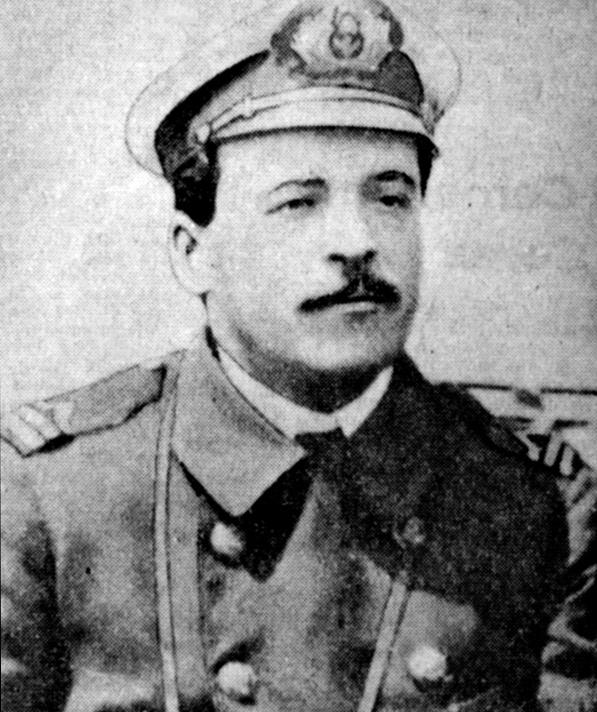
For his vital part in the rescue, Luis Pardo was later offered a reward by the British Government, reputed to be £25,000 — a vast sum for the time. He declined it, saying simply: "I was only doing my job."
The measure of his character is revealed more fully in a letter he wrote to his father, upon learning he had been chosen to navigate the Yelcho on the rescue attempt.
In May 1930, Luis Pardo was appointed attaché to the Chilean Consul in Liverpool, and the following month he delivered an illustrated lecture about the Elephant Island rescue at the Royal Institution. In the years before his return to Chile in 1934, he likely gave several more such lectures across England. He died on 22nd February 1935, in Santiago. To this day, Luis Pardo is deservedly feted as a national hero in Chile.
In contrast, Tom Crean returned to Ireland and rarely spoke of his exploits. For nearly a century, recognition of his achievements existed only in the form of a single, privately funded bronze statue facing the South Pole Inn, his home in Annascaul — that is, until January 2021, when, 11 years into a campaign for official state recognition, a scientific research vessel, RV Tom Crean, was named in his honour.
The Long Journey Home

On 8th November 1916, the passenger and refrigerated cargo steamer Highland Laddie arrived at Tilbury Docks in London. On board was Tom Crean, along with a number of his Endurance colleagues — eleven men in total, offered free passage from Buenos Aires by the Nelson Line's owners. Ten of the returning party had spent four and a half harrowing months on Elephant Island.
Two years into the First World War, the men arrived back to a time and place unrecognisable from the world they had left behind. George Marston, the expedition's artist, captured that disorientation best as the Highland Laddie navigated her way up the Thames.
Speaking to Reuters after disembarking, Frank Wild reflected on the journey that had made the rescue possible in the first place — the 800-mile voyage of the James Caird that had carried Shackleton, Crean and Worsley to South Georgia.
One notable absence among the returning party was Perce Blackborrow, the youngest crew member, who had been part of the stranded shore group. Blackborrow remained in hospital at Punta Arenas, where he spent three months in treatment following the amputation of the toes on his left foot, lost to severe frostbite.
Among the party of men who did return on the Highland Laddie was the Irish Giant, Tom Crean — a man who had played a primary role in what remains the greatest rescue in maritime history.
If you enjoy my work and research on Tom Crean's story
Please buy me a beer. I can't reciprocate that, unless we meet in person one day, but any donation you make is reinvested to maintaining the Tom Crean platforms I operate and to keeping Tom Crean's name at the forefront.
☕ Buy Me a Beer
